Introduction
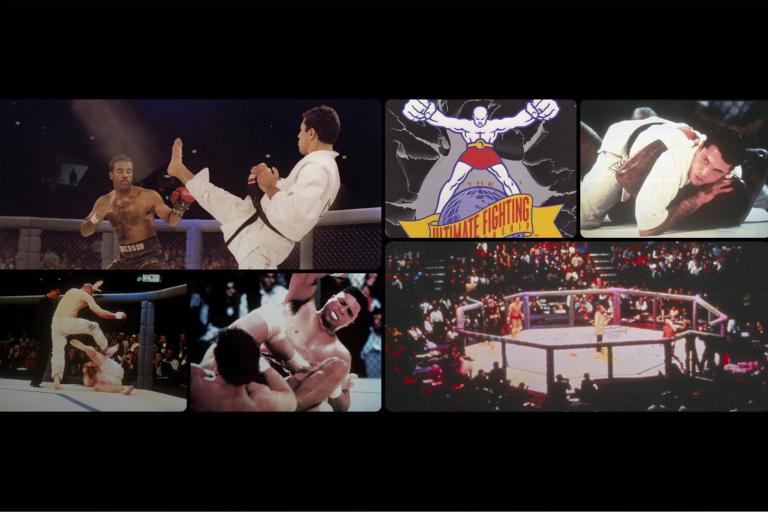
On November 12, 1993, a half-empty arena in Denver, Colorado watched eight men from eight different fighting disciplines step into a chain-link octagon to find out, once and for all, which martial art was best in a real fight. There were no weight classes, no judges, no rounds, and almost no rules. By the end of the night, a 175-pound Brazilian in a white gi had submitted three larger men in a combined six minutes and used a $50,000 cheque to launch what would become the biggest combat sports promotion on Earth. This is UFC 1: The Beginning.
What follows is a complete event profile — quick facts, the tournament path, every result, the bonuses, the records and milestones, and the long legacy of the night the UFC began.
Contents
Quick Facts
Event Overview
Main Event — Royce Gracie vs Gerard Gordeau
Headline Bout — Royce Gracie vs Ken Shamrock
Notable Fights on the Card
Full Results
Awards & Bonuses
Records & Milestones
Aftermath & Legacy
Frequently Asked Questions
References
Quick Facts
Date: Friday, November 12, 1993
Venue: McNichols Sports Arena, Denver, Colorado, USA
Attendance: 7,800 (less than half-full)
PPV Buys: Approximately 86,000
Format: Eight-man single-elimination tournament — no weight classes, no judges, no time limits beyond unlimited five-minute rounds
Tournament Winner: Royce Gracie — defeated Gerard Gordeau in the final by rear-naked choke at 1:44 of round one
Grand Prize: $50,000
Broadcast: Live on pay-per-view via Semaphore Entertainment Group (SEG)
Commentary: Bill 'Superfoot' Wallace, Jim Brown and Kathy Long; analysis by Rod Machado; post-fight interviews by Brian Kilmeade
Referees: João Alberto Barreto and Hélio Vigio (Brazilian vale tudo veterans)
Ring Announcer: Rich 'The G-Man' Goins
Co-creators: Rorion Gracie, Art Davie and John Milius
Event Overview
UFC 1, originally titled simply 'The Ultimate Fighting Championship' and only retroactively renamed 'UFC 1: The Beginning,' was the brainchild of Brazilian Jiu-Jitsu pioneer Rorion Gracie, California ad-man Art Davie and Hollywood director John Milius — the man behind Conan the Barbarian. The pitch was simple: take the legendary Gracie family garage challenge fights, where members of the Gracie clan invited representatives of any martial art to test their style against Gracie Jiu-Jitsu, and put the concept on national pay-per-view. The question they wanted to answer was the question every martial arts fan had argued about for decades — could a wrestler beat a boxer, could a karateka beat a sumo, could a kickboxer beat a jiu-jitsu black belt?
Denver was chosen for one practical reason: Colorado had no state athletic commission. There was no governing body to refuse the event sanction. Promoter Davie pitched the night as a real-life Mortal Kombat, and SEG executive Campbell McLaren had wanted the cage topped with razor wire. The razor wire idea was rejected; the chain-link octagon — designed by SEG art director Jason Cusson on Milius's instruction — was kept. The event was almost ignored by the mainstream press: neither the Denver Post nor the Rocky Mountain News bothered to send a reporter, and Black Belt magazine only mentioned it months later. Most of the contemporary coverage came from the Los Angeles Times, whose television critic reviewed it as a pay-per-view oddity.
The eight men who actually showed up were a wildly mismatched cross-section of fighting traditions. There was 410-pound Hawaiian sumo Teila Tuli, savate world champion Gerard Gordeau from the Netherlands, professional boxer Art Jimmerson (who, infamously, walked into the cage wearing a single boxing glove), kickboxer Kevin Rosier, taekwondo specialist Patrick Smith, karate fighter Zane Frazier, Pancrase shootfighter Ken Shamrock, and the man Rorion Gracie picked to represent his family — his 26-year-old brother Royce, a 175-pound BJJ black belt who, by family design, did not look intimidating. Rorion picked Royce specifically because he was the smallest and least scary-looking Gracie; the message was that technique, not size, was the point.
Main Event — Royce Gracie vs Gerard Gordeau (Tournament Final)
Result: Royce Gracie defeated Gerard Gordeau via submission (rear-naked choke) at 1:44 of round one.
By the time the final began, Gerard Gordeau was already a folk hero. The Dutch savate champion had announced his arrival to mixed martial arts 26 seconds into the night by soccer-kicking Teila Tuli's tooth out of the sumo's mouth — one of the most viscerally shocking moments ever captured on combat sports television. He'd then dispatched kickboxer Kevin Rosier in 59 seconds in his semifinal. He came into the final on adrenaline, with broken bones in his right hand and a tooth from Tuli still embedded in his foot.
Royce, by contrast, looked unbothered. He had submitted Art Jimmerson with a positional squeeze in 2:18, then taken Ken Shamrock down and choked him out in 57 seconds. He walked into the final the way the Gracies always walked into challenge matches — in the family gi, escorted by a long line of brothers and cousins, the whole tableau designed to scream technique-over-everything.
The fight itself was a clinic. Gracie closed the distance, caught Gordeau in a clinch and dragged the lanky Dutchman down. He worked his way to back mount, locked in a rear-naked choke, and held it. Gordeau tapped — though referee João Alberto Barreto, working from vale tudo conventions, did not stop the fight on the tap and Gracie held the choke for several extra seconds before releasing. Final time: 1:44. Royce Gracie was the first ever UFC tournament champion, the cheque was for fifty thousand dollars, and Gracie Jiu-Jitsu had just announced itself to the United States.
Headline Bout — Royce Gracie vs Ken Shamrock (Semifinal)
Result: Royce Gracie defeated Ken Shamrock via submission (rear-naked choke) at 0:57 of round one.
If UFC 1 had a co-main event in modern terms, this was it. Ken Shamrock — the heavily-muscled, extensively-tattooed shootfighter who had built his reputation in Japan's Pancrase organization — was the only man on the bracket with submission credentials of his own. He was bigger than Gracie, stronger than Gracie, and unlike every other fighter on the card he understood what a leg lock and a choke could do. He had submitted Patrick Smith with a heel hook in 1:49 in his quarterfinal. The expectation in the building was that, if anyone could solve the puzzle of the gi-clad Brazilian, it was Shamrock.
He did not. Gracie shot in low, took Shamrock down, climbed straight to back mount and was hunting the choke before Shamrock had time to defend. Inside a minute it was over. Shamrock tapped at the 57-second mark — the fastest submission of his career to that point — and the post-fight tension between the two men set up what would become one of the foundational rivalries in MMA history. They would meet again at UFC 5 in 1995 in the infamous 'Superfight' that ended in a controversial 36-minute draw.
Notable Fights on the Card
Gerard Gordeau def. Teila Tuli — TKO (kicks/punches) at 0:26
The fight that introduced the world to the new sport. Tuli, a 410-pound Hawaiian sumo, charged Gordeau, slipped, and ended up on his back at the cage. Gordeau planted a savate-style head kick into Tuli's face that sent a tooth flying into the front rows and lodged a second one in the bridge of Gordeau's own foot. He followed with a right hand and the corner waved it off. Twenty-six seconds. The tone for the entire promotion — small fast technician beats large untrained giant — was set in the very first bout.
Royce Gracie def. Art Jimmerson — Submission (positional) at 2:18
The fight that gave Art Jimmerson his nickname for the rest of his career: 'One Glove.' Jimmerson, a legitimate professional boxer with a 29-fight pro record, walked into the cage wearing one boxing glove on his lead jab hand and nothing on his rear. The single glove decision suggested he was treating the fight as a contest he could box his way through while keeping one hand free to grapple. Gracie closed the distance in seconds, took him down, advanced position, and Jimmerson — with no concept of how to escape — tapped without ever throwing a punch. He returned to boxing and finished his pro career 33-18.
Ken Shamrock def. Patrick Smith — Submission (heel hook) at 1:49
The fight that put Ken Shamrock on the American MMA map. Smith was a taekwondo specialist who had told Shamrock pre-fight that 'I will see your soul.' Shamrock took him down, rolled into a heel hook, and forced the tap inside two minutes. Smith would return at UFC 2 and reach the final, but the foot-lock he ate at UFC 1 became one of the earliest recognised submission finishes in American MMA.
Jason DeLucia def. Trent Jenkins — Submission (rear-naked choke) at 0:52 (Alternate Bout)
The forgotten fight on the card. DeLucia and Jenkins fought as the alternate bout, on standby in case any of the eight tournament fighters pulled out. Nobody did, so DeLucia's 52-second rear-naked choke didn't actually count toward the tournament — but it secured him a place in UFC history as a competitor at the very first event, and he would return at UFC 2 to fight Royce Gracie in a non-tournament bout.
Full Results
Quarterfinals
• Gerard Gordeau def. Teila Tuli — TKO (kicks/punches), R1 0:26
• Kevin Rosier def. Zane Frazier — TKO (corner stoppage), R1 4:20
• Royce Gracie def. Art Jimmerson — Submission (positional), R1 2:18
• Ken Shamrock def. Patrick Smith — Submission (heel hook), R1 1:49
Semifinals
• Gerard Gordeau def. Kevin Rosier — TKO, R1 0:59
• Royce Gracie def. Ken Shamrock — Submission (rear-naked choke), R1 0:57
Final
• Royce Gracie def. Gerard Gordeau — Submission (rear-naked choke), R1 1:44
Alternate Bout
• Jason DeLucia def. Trent Jenkins — Submission (rear-naked choke), R1 0:52
Awards & Bonuses
UFC 1 had no formal post-fight bonus structure — Performance of the Night and Fight of the Night awards were not yet a UFC concept. The honors below were retroactively assigned in the 2011 UFC Encyclopedia by Thomas Gerbasi:
Tournament Champion: Royce Gracie ($50,000)
Fight of the Night (retroactive): Royce Gracie vs. Ken Shamrock
Knockout of the Night (retroactive): Gerard Gordeau def. Teila Tuli
Submission of the Night (retroactive): Royce Gracie def. Gerard Gordeau
Records & Milestones
• First UFC event in history.
• First use of the Octagon — the eight-sided chain-link cage designed by SEG art director Jason Cusson on John Milius's instruction, which became the UFC's permanent trademark.
• First UFC tournament champion: Royce Gracie.
• First UFC bout: Gerard Gordeau vs. Teila Tuli (R1 0:26 TKO).
• First UFC submission: Ken Shamrock def. Patrick Smith via heel hook (R1 1:49).
• First UFC knockout: Gerard Gordeau def. Teila Tuli.
• First UFC corner stoppage: Kevin Rosier def. Zane Frazier.
• Royce Gracie became the first fighter to win three fights in a single UFC night — the start of an 11-fight UFC win streak across UFC 1, 2, 3 and 4 (1993–95), the longest in promotion history until Anderson Silva broke it in 2010.
• Three of the eight UFC 1 finishes were rear-naked chokes — Gracie used it twice (Shamrock, Gordeau) and DeLucia used it once (Jenkins) in their alternate bout, making it the most prolific finishing technique on the inaugural card.
• UFC 1's pay-per-view performance (~86,000 buys) was strong enough to immediately greenlight UFC 2, ensuring the promotion would survive its inaugural night.
Aftermath & Legacy
UFC 1 changed combat sports forever, and it did so almost by accident. The promoters had pitched it as a one-night spectacle — a real-life fighting video game, in Campbell McLaren's words — and assumed nobody would care after the cheque was cashed. Instead, two things happened. First, the pay-per-view performed well enough that SEG immediately greenlit a second event, and a third, and a fourth. Second, every martial artist in the United States who watched the broadcast was forced to confront the same uncomfortable conclusion: a 175-pound man in a gi had just submitted three larger men in under six minutes of actual fighting. Brazilian Jiu-Jitsu had won.
Within months, BJJ schools across the United States and Europe were oversubscribed. Within years, every serious martial artist had to either learn ground fighting or be made to look ridiculous on television. The 'Gracie effect' — the realisation that ground fighting was a non-optional component of unarmed combat — became the single most significant philosophical shift in martial arts since the 1960s, and it was launched by 6 minutes 19 seconds of total fight time at McNichols Sports Arena.
The event also produced the foundational rivalry of the UFC's first era. Royce Gracie and Ken Shamrock would meet again in the UFC 5 'Superfight' in 1995 — a 36-minute draw that effectively ended the early Gracie era — and would feud in interviews and across promotions for the better part of two decades. Both men were inducted into the UFC Hall of Fame in 2003 — the inaugural class.
By the late 1990s, UFC 1's no-rules format had become a political liability. Senator John McCain famously called the promotion 'human cockfighting' and pressured cable companies to drop pay-per-view distribution, nearly killing the promotion before the Fertitta brothers and Dana White rescued it in 2001. The Unified Rules of Mixed Martial Arts that govern the modern sport — weight classes, rounds, judges, gloves, banned techniques — were created in direct response to UFC 1 and its early successors. The chain-link octagon, however, survived intact. So did the choice of November 12 as a kind of unofficial UFC birthday. Thirty-three years on, the McNichols Arena no longer exists (it was demolished in 2000) and the Octagon now lives on every continent. But it all started with eight men, one tournament, and a small Brazilian who walked in carrying a $50,000 cheque before the night was over.
Frequently Asked Questions
When and where was UFC 1 held?
UFC 1: The Beginning was held on Friday, November 12, 1993 at the McNichols Sports Arena in Denver, Colorado, USA.
Who won UFC 1?
Royce Gracie won the eight-man UFC 1 tournament. He defeated Art Jimmerson, Ken Shamrock and Gerard Gordeau in succession, all by submission, on the same night, and took home the $50,000 grand prize.
How many fights were on UFC 1?
Eight bouts in total: seven tournament fights (four quarterfinals, two semifinals and the final) plus one alternate bout between Jason DeLucia and Trent Jenkins.
Why was UFC 1 held in Denver?
Colorado had no state athletic commission in 1993, which meant the promoters did not need governmental approval to stage a no-rules, bare-knuckle event. Several other states would have refused the sanction, so Denver was the path of least regulatory resistance.
What were the rules at UFC 1?
There were almost no rules. No weight classes, no rounds, no judges. Only three prohibited techniques — biting, eye gouging and groin strikes — were enforced, and even those carried only a $1,500 fine. Fights ended by knockout, submission or corner stoppage.
Was UFC 1 the first MMA event ever?
It was the first event held by the Ultimate Fighting Championship, but it was not the first mixed-style fighting event in history. Brazilian vale tudo had existed since the 1920s, and Japan's Pancrase had launched two months earlier in September 1993. UFC 1 was, however, the event that introduced the no-holds-barred mixed-style fighting concept to mainstream United States audiences.
How much did UFC 1 pay the winner?
The grand prize for the tournament winner was $50,000. Royce Gracie collected the cheque after submitting Gerard Gordeau in the final.
Who fought in the UFC 1 alternate bout?
Jason DeLucia defeated Trent Jenkins by rear-naked choke in 52 seconds. The fight was a standby bout in case any tournament fighter pulled out. None did, so the result is a non-tournament fight in the official UFC record.
References
UFC.com — Revisiting UFC 1: The Beginning
Tapology — UFC 1: The Beginning event page
ESPN — UFC 1: The Beginning fight results
Denver Public Library — Denver's Forgotten Role in the Birth of the UFC